Showing posts with label diet. Show all posts

Wednesday, 9 March 2016

Workshop - Effortless Beauty On The Inside Out

Did you know that Beauty comes from both what you eat and what you put on your face?

Come join us for a delicious lunch where our experts will give you essential tips on what foods to eat to boost your natural beauty as well as how latest scientific discoveries have unlocked youth in skincare.

The session will be interactive too! Two lucky attendees will be chosen to be our model for the live demonstrations of both our facial regime and one useful make up essential to say 'bye bye' to wrinkles and eye bags!

Price is $45 and includes 3-course meal at Equilibrium, Capitol Piazza.


Sign up today at: http://effortless-beauty.peatix.com

Speakers:
Chong Su Lee (Look Good Feel Great Always) is a wellness consultant who is a trained chemist but now helps people get fit and healthy through customised plans.

Natalie Turner (Energise Life)

Tuesday, 8 March 2016

Drinking more water reduces sugar, sodium and saturated fat intake


Based on the fact that about two thirds of our bodies are comprised of water, it may seem obvious that consuming water is important for our health. But a new study finds that by increasing plain water consumption, we can control our weight and reduce intakes of sugar, sodium and saturated fat.

The study, published in the Journal of Human Nutrition and Dietetics, is led by Prof. Ruopeng An, from the University of Illinois.

Though most people meet their body’s fluid requirements by drinking plain water and other beverages, we also get some fluids through certain foods, such as soup broths, celery, tomatoes and melons.

To further investigate how increasing water intake can affect parameters of health, the researchers used a nationally representative sample of more than 18,300 adults in the US from the National Health and Nutrition Examination Survey (NHANES) 2005-2012.

The researchers asked participants to recall all foods and drinks they consumed on 2 days that were between 3-10 days apart.

Prof. An then calculated the amount of plain water that each participant consumed as a percentage of daily dietary water intake from both foods and drinks.

Although drinks such as black tea, herbal tea and coffee were not assessed as sources of plain water, Prof. An did include their water content in the calculations of total water consumption.

Promoting water consumption: a public health strategy
On a daily basis, the participants consumed an average of about 4.2 cups of plain water, which accounts for just over 30% of their total water consumption.

The average calorie intake for each participant was 2,157 calories, which included 125 calories from sugar-sweetened beverages and 432 calories from “discretionary foods” – desserts, pastries, snack mixes and other foods that are not essential.

The results of the study revealed that people who increased their consumption of plain water by one to three cups daily lowered total energy intake by 68-205 calories each day and their sodium intake by 78-235 g each day.

For purposes of the study, “plain water” was defined as water from a tap, cooler, drinking fountain or bottle.

Further results showed that the people who increased their water consumption also consumed 5-18 g less sugar, as well as 7-21 g less cholesterol.

“This finding indicates that it might be sufficient to design and deliver universal nutrition interventions and education campaigns that promote plain water consumption in replacement of beverages with calories in diverse population subgroups without profound concerns about message and strategy customization,” says Prof. An.

He and his team add that these effects were similar across race, ethnicity, education attainment, income level and body weight status, however, they were larger among males than females, and among young or middle-aged adults than older adults.

Prof. An suggests these differences could have been linked with the higher daily calorie intakes associated with men and young or middle-aged adults.

The researchers conclude their study by noting that “promoting plain water intake could be a useful public health strategy for reducing energy and targeted nutrient consumption in US adults, which warrants confirmation in future controlled interventions.”

Source: MedicalNewsToday.com

Thursday, 3 March 2016

Webinar - What's The Fuss Over Detox & Cleansing?


Are you curious to learn about the body's detoxification process? Find out how what we consume and how our lifestyles affect the way our bodies get rid of toxins. Also, learn about the recent popular detox and cleansing programmes to understand what really works and what doesn't.

Come and join us for this webinar on Wed, 23 Mar at 8pm to hear from our wellness coach, Chong Su Lee of Look Good Feel Great Always, to learn about how the body's natural detoxification process and how our modern lifestyles and food habits are affecting this. Register below! https://attendee.gotowebinar.com/register/6801776114998311940

Tuesday, 23 February 2016

Mood Boosted With Jeunesse RESERVE Antioxidant Fruit Blend Gel

Hi, Bianche here to have a look at the Jeunesse RESERVE Antioxidant Fruit Blend Gel for Beauty which I consumed for a week straight. I am selective about the things which I dine on and the activities that I do - they have to be favorable and wholesome to my health.  I am also consistently vigilant about brand-new beauty treatments or products which may advance my beauty but I'm quite thrilled with this antioxidant gel drink!


Above is how each gel pack looks like and the drink itself has a slight jelly consistency. It's mauve-coloured and chock-full of acai, pomegranate, blueberries, cherries, aloe vera and green tea.

What RESERVE is composed of

It tasted absolutely delicious! The flavour was of concentrated cherry and blueberry: sweet but slightly tangy. 

Raves for the convenient small gel packs! They are light and flat, so you can throw a couple into your handbag which makes it convenient to bring around everywhere! You wouldn't worry about it breaking or not keeping well. It lasted the entire day in my purse before I remembered to drink it. 

When you're having a tough day, drinking this has the power to brighten your mood up psychologically. To me, this is equivalent to consuming Chicken Essence (a quintessential tonic that Singaporeans like to take in order to improve their mental or cognitive performance) although this also has beauty benefits.

What makes Jeunesse's RESERVE so powerful? Undoubtedly delectable and luscious, it's packed with concentrated beauty ingredients - acai, green tea, blueberries and pomegranate which put me in a five-star mood that I was ingesting such super foods and improving my health and my aesthetic appearance daily. Moreover, the antioxidants in the gel ensured that my energy levels were kept high. 

As mentioned earlier, Jeunesse RESERVE has a slight jelly texture which I love. I kept my sachets in the refrigerator because I enjoyed drinking them cold. I drank this every morning when I woke up, during the time I was unwell and even before a photoshoot!  They had the power to cheer me up, give me a confidence boost and generally brightened up my mood for a full day. 

This product comes from the United States and according to the manufacturer, Jeunesse,

Reserve™ helps to:

• Combate free radical damage, which is linked to many health issues

• Release powerful antioxidants into your body
• Make young cells last longer, supercharging health & well-being
• Delay cell aging and premature aging, extending lifespan
• Improve cardiovascular function with anthocyanins
• Aid digestion through essential fatty acids
• Increase metabolism to assist healthy weight loss
• Make nutrients quickly available through bio-available gel
• Penetrate red blood cells and helping to protect against oxidated stress
• Contains only natural fruit that is delicious


Taking Reserve™ every single day results in:

• Radiant skin

• Increased energy levels
• Anti-aging effects
• Nutrition delivered at cellular levels


I took these photos in the week when I was sloshing down RESERVE. Despite feeling sick, I think I still look quite radiant!


It significantly bolstered my disposition when I was feeling under the weather. When you find that you're stretching yourself out thin, safeguard your beauty and energy by taking Jeunesse Reserve.

Healthy, optimises your beauty, heavenly and yummy, I am smitten with this sweet drink! 


To purchase your one-month supply of Jeneusse RESERVE gel packs, visit http://shop.swagguide.com/collections/jeunesse/products/reserve. If you are interested to become a wholesale consumer and purchase it at a discount, do write in to marketing@passhen.com to find out more!


30 Days After Parasite Cleanse


I have finally ended my parasite cleanse! I can't believe that it has been a month since I've started on this cleanse and it is amazing how many things have happened to my body since then. Nothing significant has happened since last week but I do realise now that alcohol hits my system a lot faster than before. Chilli also tastes a bit spicier. What is 'worse' is that my body now rejects junk food and makes me pay for it the next day by depositing the junk in the harshest manner. Not diarrhoea. Just whoosh....plus cramps. I can feel my intestines doing it's job.

There was an interesting conversation that I had with someone over Facebook though. I was tagged by a mutual friend on this lady's (let's call her OC) post because he knew that I had gone on this cleanse and OC is quite sure that she has parasites because her boyfriend was diagnosed with it. She and her boyfriend were losing a lot of weight suddenly while feeling fatigued, which led her boyfriend to go see the doctor and he was finally diagnosed with having parasites.

OC was a bit conflicted because although she knew that she had parasites, she wanted to get rid of all of them but the prescribed medication from the doctors only killed a few types. Moreover, the testing required for all the parasites plus the medication would be a very hefty sum. Some of her friends advised her to do natural healing and herbal remedies.

What's my take? I told her that since it's quite obvious to her that she has parasites, she should go to the doctor and get those medication quick. Kill them fast and then use herbal detox to cleanse out all the endotoxins built up by those parasites as well as caused when the parasites die.

Hearing her story made me more convinced that even in our clean society, these little buggers are still around and surviving well. Thus, I will do this parasite cleanse once a year. In the meanwhile, I also happen to receive a free bottle of garlic supplements so I'll eat those from now so as to prevent more parasites from growing before my next cleanse. Yup...those critters hate loads of garlic!

To learn more about the 30-day ClearStart or Paraway Plus, go to: https://shop.swagguide.com/collections/unicity.

Monday, 22 February 2016

Are You Gluten-sensitive?

I've been talking to a lot of people about how I found out that I'm slightly gluten sensitive and why a lot of people probably are but simply do not know about it. After every such conversation, most of them would ask me to blog about it and so here I am! I must stress that I'm no expert and this is only my opinion. You should always consult your doctor and do more proper research before you embark on any crazy experiments with your diet.

First of, let's find out what gluten really is. According to www.livescience.com, gluten refers to the proteins found in wheat grain but it can also be found in other cereal grains such as rye and barley. It is what makes breads and cake have that elastic texture.

Is Gluten Bad?
If you're gluten-intolerant, then yes...you can't eat any gluten and some severe cases of gluten-intolerance have met with death. The most well-known form of gluten intolerance is celiac disease and when someone with this disease consumes gluten, it will trigger an immune response that damages their intestines, preventing them from absorbing vital nutrients.

Another form of gluten intolerance, although quite rare, is wheat allergy and the reaction is normally through skin, respiratory or gastrointestinal. It is in recent years that scientists have found another form of gluten intolerance where patients may experience many celiac disease symptoms, such as diarrhoea, fatigue and joint pain, but do not appear to have damaged intestines. This is when doctors would recommend the patients to go on a gluten-free diet.

Why the trend to go gluten-free?
There is a perception that going gluten-free is healthier because some articles have written that the human stomach does not digest wheat that well, therefore causing a lot of gas in the stomach and intestines. In addition, the publication of Karyn Seroussi’s "Unraveling the Mystery of Autism and Pervasive Developmental Disorder: A Mother’s Story of Research and Recovery" in 2000, and actress Jenny McCarthy’s books and activism, prompted many parents of autistic children to try a diet free of gluten and casein, a protein in milk. As some parents reported success with the diet, scientists devised studies to try to pin down the diet’s impact on behavior. So far, however, these studies haven’t convinced scientists of the diet’s effectiveness.

Nonetheless, this 'health' craze doesn't seem to be ending any time soon especially with celebrities such as Miley Cyrus and Lady Gaga going on a complete gluten-free diet and claiming that they lose weight in the process. Gluten-free is now big business and the marketing folks at each of these health food companies aren't going to stop churning out them gluten-free labels. Yay for those with celiac while the rest of us had better make more informed choices.

Why I went gluten-free
As I was researching about endometriosis and other autoimmune diseases, I read about how researchers have seen that there's non-celiac gluten sensitivity (as mentioned earlier) and that people with this gluten sensitivity tend to have other autoimmune diseases or symptoms. I too often felt fatigued and bloated, but I blamed it all on the endometriosis plus stress at work. However, those articles that linked gluten sensitivity to the symptoms of endometriosis made me want to test out this theory.

Thus, I went a full month without eating a lot of gluten. I can't say that I went totally cold turkey because the sad thing about food these days is that there are a lot of gluten traces during the processing of food...even for soy sauce. What I did do was cut out pasta, breads, pizza, wraps, cakes and donuts. However, I did not cut out carbs. I merely chose alternatives such as rice and potato.

I was never a huge fan of cakes, bread and donuts so it was not that hard the first week into this diet. However, lunch was a tough choice because I could not eat pasta, wraps or pizza. I had to stick to potato and rice...which limited the variety of meals. Sometimes, I had no choice but to succumb to eating gluten as I could not be too fussy about my meals when dining with my (now ex) colleagues. Nonetheless, I pressed on.

The result? I lost the bloat but in terms of weight loss, it was about 0.5kg overall but what I liked most of all was that I no longer had that uncomfortable bloating. Moreover, the lack of fatigue was more significant and my energy levels were higher during the day.

When I went back to my regular diet, I experimented again. I took my weight every morning to see whether what I ate the day before would affect my weight the next day. I found out that I could eat gluten at any time of the day except for dinner. If I ate a plate of pasta or even a nice sandwich, I would put on 0.5 to 0.8kg the next day.

Is it all in our heads?
A couple of researchers who studied self-diagnosed gluten-sensitive patients found that that NONE of them were actually gluten sensitive. The study also revealed that these patients were experiencing a "nocebo" effect, where they thought they'd feel worse when given gluten and therefore would really feel worse when given gluten. In other words, it's all psychological.

Another study also states that people who go on gluten-free diets often make other lifestyle changes which contribute to their weight loss or better skin. For example, someone might cook more meals at home rather than eating fast food as they go on this gluten-free diet. They may eat more vegetables and less fatty foods as a result as well.

For me, that was not true because I was still working full time at a 9 to 5 job and although I wasn't eating pizzas and pasta, I was still eating my chye png and rice noodles etc. I was also actively  recording down the calorie intake each day and it hardly changed from my gluten-laden days. That is why my conclusion is that I'm slightly sensitive to gluten and it has been helping me control the bloat better than all the other 'solutions' that I get from therapists at the spas.

Many dieticians do not recommend going on a gluten-free diet because grains that contain gluten often contain other essential nutrients such as vitamin B6. Moreover, some manufacturers add in fat into gluten-free products in order to enhance the taste or to improve the texture. I've also seen some gluten-free products containing white rice flour, which means that it has been processed twice, making me wonder how much nutrients would've been stripped away before it became noodles or pasta sheets.

Nevertheless, please do not take my word for it. Go see the doctor, get yourself tested and then experiment a little with your diet. We are unique individuals and our diets should be customised for our current lifestyles too.

Monday, 15 February 2016

Loading Up On Antioxidants

As you know, I was quite ill 2 weeks ago with sore throat and what not. It was only later that I realised that I was having a healing crisis from my parasite cleansing but it was still important to tackle the symptoms of my illness.

I got my box of Jeunesse Reserve gel packs a month ago and have been taking it faithfully everyday.  What I like about it is that it's super delicious and you can taste the fruits used in this blend - cherries, blueberries and grape seed. As we know, antioxidants help repair our bodies on the cellular level. There are many different types of antioxidants but they basically help to combat free radicals and prevent aging while boosting immunity and energy levels.

On normal days, I drink one gel pack in the morning and I do find that it had similar effects on me as caffeine in terms of energy levels. I felt more alert but unlike caffeine, there wasn't a crash or heart palpitations. After one week, I was convinced that the ingredients used were good stuff. So when I started having that bad sore throat, all the more I needed to combat it and support my body's natural defence by boosting it with Vitamin C and antioxidants.

My usual 'cure' for sore throats is apple cider vinegar with honey. This time round, I added in my Jeunesse Reserve to the mix. As the gel drink itself is very sweet, you may be able to add in more vinegar. I used warm water as it was more soothing but you can add in ice if you want it cold.
The eventual concoction is this dark purple drink. It still tasted like cherries, vinegar and honey. It was quite delicious and it did help with the energy levels despite me being so sick.

To purchase your month's supply of gel packs, visit http://shop.swagguide.com/collections/jeunesse/products/reserve or http://passhen.jeunesseglobal.com.

To request for a sample, send an email to marketing@passhen.com with your name and mailing address.

Sunday, 14 February 2016

Three Weeks After Parasite Cleansing

It has now been three weeks since I've embarked on this parasite cleansing journey...which means that I've also gone beyond the half way point! 10 more days! So, what interesting things happened this past week?

That, my dear friends, is not a rash under my armpit. I suddenly spotted it one day after my shower and was wondering what that was. It didn't hurt nor itched. I suspected that it's my lymph nodes flaring up and when I did some online research as to the positions of lymph nodes, I did hit the nail on the head.

My skin on my arms are still itching and I see more rashes coming up, which isn't fun. The most irritating thing that has occurred so far is the mucus production in my sinuses. I've always had sinusitis and now I can feel a lot of drip back to my throat but my nostrils aren't clogged up. Weird. However, this is affecting my sleep. I've started to snore instead of my usual heavy breathing and I'm breathing through my mouth while I sleep, causing a very dry mouth in the mornings.

Again, all these are typical detox features. Flaring up incredibly since it's my first real detox/cleanse.  Good news is that I haven't noticed any more critters in my stool during my trips to the loo. That probably also explains why the symptoms of the cleanse are now mainly on my skin and sinuses, because the herbs are now taking effect and helping to get rid of residual endotoxins.

What I find the most interesting thing now is that my appetite has gone down. I no longer crave for oily, fried foods such as fried chicken and french fries. Both of them used to be my biggest indulgences but during the week, I did buy a fried chicken wing and when I bit into it, it no longer tasted as wonderful as I thought it would. Also, I find that I'm eating less than my usual and that's helping with maintaining my weight loss. I'm half surprised but yet rationally, I was expecting this to happen. Why? Parasites feed on your food and they are known to be the ones sending signals to your brain to eat more sugar and oily foods because that's what they like to eat. And in large quantities. Now that I've finally gotten rid of them from my body, I don't have these aliens telling my brain to feed my body with junk food. Furthermore, the hormones controlling the signals of sugar levels in the body etc can now work properly. Thus, I'm eating the amounts that I really require.

A lot of doctors and nutritionists poo-poo detox programmes saying that the body will naturally detox itself. Which is true. However, the body doesn't naturally get rid of parasites and that is why after  starting this parasite cleanse, I've been recommending people to do it. Another problem with the modern diet is that we eat too much processed foods and then there's also external pollution that's messing with our skin. There's just a lot for the body to process and it's natural for the body to just detox as much as it can without overloading itself. What a herbal detox does is that it helps the body deal with the daily detoxification process. Best to think of it as banging down the previously small doors of the detox centres to become floodgates. Whoosh! Suddenly the body is processing a lot more toxins a day than it normally does and when it comes to a parasite cleanse, the body has to deal with extra endotoxins released from these dying parasites.

What I'm trying to say is that all these cleanses and detox programmes are a bit of a misnomer. The herbs or juices aren't really the ones cleaning out the waste from your bodies. Your body itself is. What is going on is that these herbs and teas are supporting your body's natural detoxification and allowing more toxins to be processed. Should you then go on a detox programme or parasite cleanse? It's really up to you and what you're comfortable with. If you do choose to go on one, do note that you'll need to stick to it for at least 3 days to see any effects. It may not be easy the first time you do it but if you press on and carry on, the results are worth it. 1.5kg and counting!!

To learn more about the 30-day ClearStart or Paraway Plus, go to:  https://shop.swagguide.com/collections/unicity.

Sunday, 7 February 2016

Two Weeks After Parasite Cleansing

It has been 2 weeks since I started my parasite cleansing with Paraway Plus and the healing crisis is hitting me really bad.

As mentioned in last week's post, I developed a fever and a bad sore throat. It got so bad that I went to see the doctor last Wed and was put on a course of antibiotics, paracetamol and anti-inflammatory meds. I started feeling really good until day 10 of my cleanse where I had to up the number of pills from 2 to 5. On Day 10 itself, I started having a sore throat in the evening. On Day 11, I woke up with my throat more swollen and I even had a mild fever in the afternoon. This meant more paracetamol and anti-inflammatory meds going into my system. Moreover, I had such bad insomnia that I did not sleep till 6am the following morning. I was soon up 2 hours later and that's when I messaged Su Lee for advice.

This is the full symptoms of my healing crisis:
  • fever
  • sore throat
  • semi-blocked sinuses with drip back (probably causing the sore throat)
  • pimples
  • raised goose pimples on my arms
  • slight itching on my arms
  • thicker coating on my tongue
  • body aches
  • diarrhoea (only once)
Su Lee confirmed that it was a healing crisis and told me that if I stopped the cleanse for more than 3 days, I'll have to start from scratch all over again. Thus, I'm pressing on with loads of chlorophyll water as suggested by her. She also suggested taking probiotics as the released toxins may also cause an increase in bad bacteria in the gut so the probiotics will help combat this. Killing two birds with one stone, I mixed the chlorophyll powder with my yoghurt drink and had that for lunch since I wasn't up to swallowing any whole foods.

As per research online, Su Lee mentioned that a detox or cleansing healing crisis will cause underlying conditions to flare up more than before as they haven't really been cured. It's no wonder then that I have blocked sinuses and itching on the arms since I've had sinusitis and eczema since young. Since this is also my first proper cleansing, my body is probably not used to the sudden flood of endotoxins which explains how bad my symptoms are.

Trips to the loo have been some sort of exploration session for me as I tried to look for wriggly stuff or white things that resemble seeds. I 'complained' to Su Lee that I haven't seen any but now that I think about it, I did pass out some parasites. Instead of white ones, mine were dark brown ones! I did find them unusual and was wondering whether it was due to the spinach salad that I had the day before but then I went to do my research and I think its a type of rope worm. I did not take any photos of my stool (I think that's a little gross) but here's a photo that I found online which closely resembles what I saw in my toilet bowl.

On Day 13, I saw quite a few white things in my stool that resembled the size and shape of rice. I thought back to what I ate the previous day and the only thing that I could think that resembled that would be the brown rice that I ate plus okra. But okra seeds are smaller and rounder than those. Plus I've been eating brown rice for years and they've never come out whole like that. They didn't wriggle. Conclusion:  another type of parasite.

I'm hoping that I've gotten rid of as much as possible but from what I read and think, the increased dosage may mean that I'll be seeing more of such parasites in my stool in subsequent weeks. Oh well, better out than in!

I'm still in shock over how much parasites are in my system. Sadly, having parasites in your gut is more common than you think as these little buggers are on vegetables, grains and other types of foods. I'm just glad to be able to get rid of them. Although I really do not like going through the healing crisis. A good side effect is that I've since lost 1kg!

To learn more about the 30-day ClearStart or Paraway Plus, go to:  https://shop.swagguide.com/collections/unicity.

Sunday, 31 January 2016

A Week After Parasite Cleansing

When I posted this photo on Instagram and Facebook a week ago stating that I was going to get rid of (unknown) parasites in my body, I was really surprised at the response I received. A lot of friends and family members started asking me questions about why I was doing this, whether the Paraway Plus was a laxative (no it's not) as well as what this whole Herbal Body Cleansing is all about.

Let me start with the easy question: Why am I doing this?
Su Lee invited me to her talk on detox seminar where she showed a few videos about parasites and how all of us living in 1st world countries often think that we're parasite-free but it may be a fallacy. I found the following videos by Dr Oz which I prefer over the ones that I watched during the seminar as Dr Oz comes from a more scientific but yet natural approach to dealing with medical issues.

Be warned that some of the images are quite disturbing.


As you can see, parasites are commonly found even in so-called 'clean' countries and if you eat raw foods or have pets, your chances of getting parasites are increased. In addition, after Su Lee's bit, a few of the audience members started sharing their testimonial stories about going on this 30-day detox programme where they found either moving worms or the eggs in their stool! Su Lee herself told me months before this talk that she had gone on the cleanse and found 1 moving worm in her stool.

If you were me, wouldn't you get paranoid too and want to go on a parasite cleanse? Those who know me also know that I love my sashimi and sushi, not to mention that I'm eating a lot more salads nowadays. Yes, there are alternatives like eating garlic or papaya seeds mixed with honey but I decided that for my first cleanse, let's do this in a slightly more 'instant' method of just popping pills.

Paraway Plus is actually part of a 30-day Detox Programme called "ClearStart" but I chose to only take the parasite cleansing one because I don't really believe in detoxing (that'll be explained in another article).

What I like about Paraway Plus is that it's made up of herbs such as Garlic, Peppermint, Chamomile and loads more. Because of the herbal properties, it does not kill the parasites but stuns them so that they release their jaws from your guts where you naturally pass them out through your bowels. If you're having constipation, you might want to do ClearStart instead because it will go hand-in-hand to resolve your bowel issues.

Instructions state that I have to take 2 capsules a day for 10 days before popping 5 capsules for the next 20 days. It has been 7 days and I think I've undergone what is known as a 'healing crisis'. What's a healing crisis? When you're suddenly getting rid of parasites or other toxins from your body, or when bacteria dies within your body, these parasites/toxins/bacteria start releasing  endotoxins into your blood for filtering and natural detoxification by releasing through your urine or stool. However, by going on a plan to really eliminate these parasites and bacteria, it is suddenly a lot of waste for my body's lymph nodes to cope.

What happened next? I fell ill with a fever last Sunday and started having a sore throat. On Monday onwards, my sore throat got so bad that when I looked into the mirror, I didn't need a torchlight to see how my throat was so swollen that the entrance of my oesophagus was half its usual size. I took paracetamol which helped the fever but it came back with a vengeance on Tuesday evening, which was when I went to see the doctor for antibiotics and anti-inflammatory meds.

Besides the flu, I noticed yesterday that my skin was also started to itch and have bumps. Apparently, this is quite normal and some people experience breakouts too. I was talking to Amanda Koh, a yoga instructor, and she said that one of her friends had all his lymph nodes swollen and breaking out into pimples while he was detoxing. Whoa...I really hope that THAT doesn't happen to me when I start onto the 5 capsules a day regime.

Trips to the loo have proven to be quite interesting. I've always been looking out at my stool to observe its size (mainly because my mum had colon polyps so I'm genetically susceptible to it), colour and whether it floats or sink (float = ate too much fats; sink = been eating good). But after going on Paraway Plus, I do scrutinise my stool a little longer for signs of parasites or eggs. I did see some whitish seed-like things which make me then try to think whether I have been eating nuts/seeds.  I'm sorta happy to say that it's currently inconclusive because I do recall eating some seeds on those days but there were days where I really do not recall eating anything resembling seeds.

Su Lee told me that from experience, I'll probably not see anything for another week or so. This was further confirmed by Amanda who told me that natural detox (eg. juice fast) would normally show signs in the 5th week or so. Hmm. I'll keep you guys updated on a weekly basis.

To learn more about the 30-day ClearStart or Paraway Plus, go to https://shop.passhen.com/collections/unicity.

Thursday, 28 January 2016

Reasons for thinning hair, how to fix them and what to eat for healthier hair

Read these 2 articles on Oprah.com and decided to combine them into one because it is not only important to fix problems but to also maintain the good. My additional comments will be in italics.


You're Noticing: Thinning Along the Hairline 

Likely cause: Regularly yanking your hair back too-tight
Why it leads to thinning: Putting tension on the hairs at the front of your scalp can make them fall out. There's even a name for this type of thinning: traction alopecia. (Going overboard on hair extensions can also cause traction alopecia wherever the extensions are attached, says Doris Day, MD, a clinical associate professor of dermatology at NYU Langone Medical Center, in New York.)
How to fix it: First, be gentler to keep the problem from getting worse. If your go-to look is a ponytail or bun, use your fingertips to feel around your temples and crown and make sure you can move your hair a little. Minoxidil (the only FDA-approved topical treatment to regrow hair) can help fill in the sparse areas.

You're Noticing: Your Part Seems to be Getting Wider

Likely Cause: Female-pattern hair loss due to aging, changing hormone levels (hello, menopause!) or a family history of thinning 
Why it leads to thinning: It's not clear why but this type of thinning generally affects the part first and expands from there. Hair follicles start to shrink, producing shorter and finer hairs than they used to before they stop producing hairs at all. It generally doesn't lead to serious balding though. 
How to fix it: Minoxidil is your best option. As of 2014, 5-percent-Minoxidil products are available for women in addition to the standard 2 percent (the former used to be approved for use in men only). Your doctor may also recommend laser treatments aimed at stimulating hair growth.
I have been using HairMax Laser Comb for the past seven months and although I don't see new hair growing, it certainly has helped with the oil control on my scalp and current strands are not thinning at the root.


You're Noticing: Diffuse Thinning All Over Your Head

Potential cause: Major stress
Why it leads to thinning: Physiological stress, whether it's from a breakup, the loss of a loved one or a traumatic physical event (childbirth is a classic example), can shift hair follicles into rest mode, where they stop producing hair. It's called telogen effluvium, and it's very common, says Pamela Jakubowicz, MD, a dermatologist at Montefiore Medical Center, in New York. Because of hair's growth cycle, you'll notice thinning roughly 3 months after the stressful event.
How to fix it: Telogen effluvium generally resolves on its own. You should notice improvement about 3 months after stress levels return to normal.

Potential cause: Medications
Why it leads to thinning: Some drugs are known to cause hair thinning. Prime examples: hormonal birth control, isotretinoin for acne, blood pressure medications, cholesterol-lowering drugs and certain antidepressants.
How to fix it: Minoxidil may help, but if your hair loss is affecting your well-being, Sejal Shah, MD, a board certified dermatologist in New York, recommends asking your prescribing doctor if there are other medications you can try that don't have that as a side effect.

Potential cause: Frying your hair with hot tools
Why it leads to thinning: High heat creates air bubbles within the hair shaft that can cause breakage. If tools get too close to the root, they can damage the hair follicle.
How to fix it: Medium heat is best—if your hot tools have an intensity range between 1 and 10, for example, set them at 5. Keep hot styling tools at least an inch or two away from your scalp to protect the follicle.

Potential cause: A thyroid disorder
Why it leads to thinning: Thyroid issues lead to hair loss because follicles can't get resources they need to produce hair, says Jakubowicz. In hypothyroidism, it's because your whole system is moving slower; in hyperthyroidism, it's likely because your body is depleting resources faster.
How to fix it: If your dermatologist suspects a systemic condition like a thyroid problem is causing your thinning, they'll refer you to your internist for testing and treatment, which should also help with the hair loss


You're Noticing: You're Losing Hair in Patches

Potential cause: Skin conditions like eczema or psoriasis
Why it leads to thinning: Scaliness and buildup of skin cells on the scalp can lead to hair loss, explains Shah. (Scratching to relieve itching can make it worse.) Seborrheic dermatitis, an inflammatory condition that mainly affects the scalp and causes scaly patches, red skin and dandruff, can also trigger hair loss.
How to fix it: Treat the skin issue and hair should start to grow back on its own. Topical steroids, antifungals and medicated shampoos are often the first steps, and your dermatologist may recommend stronger options like phototherapy or oral and injectable medications if you need a more aggressive treatment.

Potential cause: Alopecia areata
Why it leads to thinning: This autoimmune condition is relatively rare, affecting roughly 2 percent of the U.S. population, but it's very noticeable because it starts with quarter-sized patches of hair loss. It often begins in childhood as the immune system attacks hair follicles.
How to fix it: There's no cure or official medications, but your doctor might recommend treatments approved for other hair-loss conditions to try to stimulate growth (cortisone injections are one option, says Day). Your dermatologist will confirm the condition first (often by pulling out a hair or two and examining them under a microscope or doing a skin biopsy of the scalp) and proceed from there.

You want: Help for your thinning hair

Try eating more: Vitamin D and iron

Too little D could be contributing to your thinning. Researchers from Cairo University in Egypt compared serum ferritin (a way of measuring your body's iron stores) and vitamin D levels in women with hair loss with women who had healthy heads of hair and found that levels of the vitamin were as much as 121 percent lower among those with thinning. About 25 percent of people over the age of 1 included in a National Health and Nutrition Examination Survey between 2001 and 2006 were at risk of having inadequate levels of the vitamin. To get more D in your diet (the RDA is 600 IU, or 15 mcg), try fish sources like salmon, sardines or canned tuna, or fortified dairy sources like milk and yogurt (look for ones specifically labeled as fortified with vitamin D).

If you're meeting your iron RDA (18 mg for women 19 to 50 years old and 8 mg for women 51 years and older), increasing your intake probably won't make a big difference. But if blood tests show that you're deficient, adding more iron to your diet may lead to a change for the better. When Korean researchers compared the serum ferritin levels of women with female-pattern hair loss to those without hair loss, they found that levels were an average of 45 percent lower among women losing their strands. Study author Jong Hee Lee, MD, at the department of dermatology at Sungkyunkwan University School of Medicine in Seoul, Korea, wrote in an email that his hair-loss patients have seen improvement with increases in iron intake. Your body absorbs iron from meat better than iron from plant sources, which is why the RDA for vegetarians is almost twice that for meat eaters, and beef is near the top of the list for iron content. Chicken and turkey are also good sources. For plant-based options, try beans, lentils or tofu. And keep in mind that it takes time for nutrient intake via food to affect hair growth, so stick with it for at least a few months to see any results, says Amy McMichael, MD, a professor and chair of the department of dermatology at Wake Forest Baptist Health, in Winston-Salem, North Carolina.

You want: More growth, and some shine wouldn't hurt 

Try eating more: Probiotics 

Inflammation can interfere with normal hair growth, and there's some research with animals suggesting that controlling inflammation by feeding your gut the right foods can counteract those damaging effects. A study in PLOS One reports that mice fed probiotics had more robust fur growth and shinier fur than mice in the control group, who didn't get any beneficial bacteria in their diets. Whitney Bowe, MD, a clinical assistant professor of dermatology at Mount Sinai Medical Center, in New York, recommends three servings per day of probiotic-rich foods and drinks like miso paste (found in miso soup), yogurt with live active cultures, kefir and kombucha. Or if you could also supplement that with Bios Life Probionic which contains 2 servings.


You want: A thicker head of hair 

Try eating more: Healthy fats and antioxidants 

A recent study in the Journal of Cosmetic Dermatology suggests that the combination of essential fatty acids and free-radical-fighting antioxidants may have more benefits than either on their own. Of the 80 women who took a nutritional supplement containing a mix of omega 3 and 6 fatty acids and antioxidants including vitamins E, C and lycopene, more than 87 percent reported having more hair on their heads and more than 86 percent said their individual strands became thicker at the sixth-month mark. (The researchers excluded women with nutritional deficiencies or health disorders that may have been a factor in subpar hair growth or might have interfered with the study's results.) Several researchers on the study came from a company co-created by L'Oréal that manufactured and marketed beauty supplements, but their findings bolster Bowe's advice: A diet that includes healthy fats and antioxidants can only mean good things for your health—and your hair.
It's not easy to watch the amounts of tomatoes (for the lycopene) or anti-oxidants plus omega fatty acids one consumes so I find it easier to just drink a Reserve Gel Pack a day as it contains tons of anti-oxidants as found in dark cherries, blueberries, grape seed and a lot more.


You want: More hair staying on your head 

Try eating more: Protein 

Most iron-rich foods are also good sources of protein, so if your iron intake is adequate, odds are your protein consumption is, too. But if you're getting a lot of your iron from relatively low-protein picks, like certain iron-fortified breakfast cereals, white rice or white bread, that may not be true. According to the American Academy of Dermatology, your body goes into rationing mode when protein intake is too low, and one of they ways the body cuts back on its protein needs is to shut down hair growth, resulting in hair loss. Once you get your protein intake back on track, your strands will follow suit. "It can take a little while to notice the effects of a lack of protein, but I see clients all the time who did a juice cleanse a month or two before they see me and now their hair is falling out," says Bowe. "And it's because there's usually no protein in those cleanses." Meeting the recommended intake of 46 grams per day for women is likely enough to maintain hair health. Getting a mix of lean meats (a 3-ounce piece of chicken, beef or pork generally has about 20 grams), eggs (a large one has 6 grams of protein), Greek yogurt (one non-fat container can pack up to 17 grams) and nuts (a small handful of almonds has 6 grams) will help you reach that goal.

Read more: http://www.oprah.com/style/Best-Foods-For-Healthy-Hair#ixzz3yY5uRdAB


Tuesday, 26 January 2016

Quick Weight Loss (Lies)

When I saw this on my Facebook newsfeed the other day, I couldn't help but burst out laughing. It is so true that there are so many people out there who are just looking for that quick-fix or instant weight loss through diet and while it is true that the cathchin in green tea increases metabolism slightly, drinking green tea alone is not going to help you lose your fats.

Sure, there are a few slimming teas out there and the ingredients inside all work somewhat like how the catechin does. However, one cannot forget that if you only drink/eat such foods but don't exercise, it will not change anything. It increases your metabolism by only a minuscule amount.

I don't believe in the "no pain, no gain" mantra either. Exercise does not mean boring yourself on the treadmill or elliptical machine. There are so many other things to do! For example, yoga, pilates, dancing or zumba. Nonetheless, that quote above does have a lesson: in order to lose weight, you've got to put in the effort. Sorry guys, but there's no quick weight loss regime there. If you see any diet programmes that tell you that you ONLY have to eat that pill in order to lose weight, they're all lies. You might be losing precious muscle instead or merely water. Be smart.

Sunday, 10 January 2016

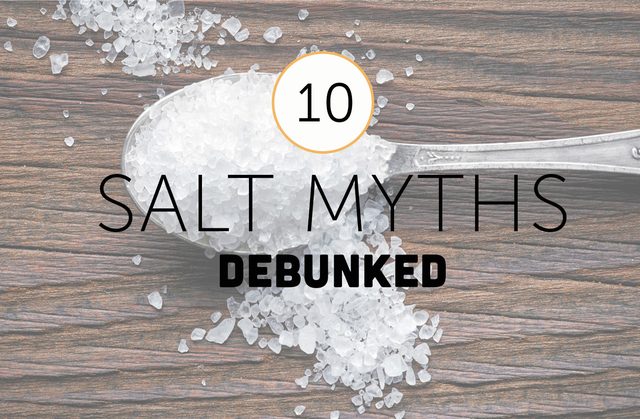
10 Myths About Salt Debunked

Is salt a dietary villain or part of a healthy diet? Photo Credit Magone/iStock/Livestrong.com

Salt, which is composed of sodium and chloride, often gets a bad rap. But sodium is necessary to maintain the body’s fluid balance, nerve transmission, muscle contraction and other key functions. And even though it hasn’t been definitively shown that a low-salt diet positively impacts heart disease or death (unless you already have hypertension or cardiac disease), many health agencies still recommend limiting sodium. The story of salt isn’t as black and white as you may think. Some health professionals even say that salt restriction causes adverse effects on health. So what’s the story? Here are 10 of the most common myths about salt and sodium and what it all means for your health:

1. The only reason to worry about salt intake is blood pressure. 
False. Actually, studies show that excess sodium has been associated with other health issues such as gastric cancer, stomach ulcers, osteoporosis, muscle cramping and brain function. Salt intake does not cause, but can contribute, to high blood pressure, specifically in salt-sensitive individuals.

2. Nothing about salt is good for you. 
False. Salt is essential for life. It's a major component of your blood, it helps carry nutrients into and out of your cells, regulates blood pressure and plays a role in nervous-system function. We need salt—just not too much or too little. The amount of salt that is right for you depends on your salt sensitivity (see #3).

3. Everyone responds to salt in the same way. 
False. Most of us are either salt sensitive or salt resistant. Your level of salt sensitivity or resistance is determined by many factors, including genetics, race/ethnicity, age, body size and general diet. Salt sensitivity is defined as when a person’s blood pressure changes significantly from increasing or decreasing salt in the diet. Older people, overweight people, women, African-Americans and South Asians are examples of groups that are known to have greater salt sensitivity. The issue of salt sensitivity underlies the reason that many studies show conflicting results about the impact of sodium on health for the general population. Some people don’t experience changes in blood pressure or water retention when eating salt and others do, depending on their salt sensitivity. Most studies tend to report averages but ultimately it’s the salt-sensitive people who should be most concerned about sodium intake. How can you tell if you are salt sensitive? There’s no easy medical test for salt sensitivity, but if you can, watch out for certain symptoms. In general, eating a healthy diet low in processed foods, high in fruits and vegetables, and lots of home-cooked meals, is a safe bet for everyone.

4. If you don’t add salt in cooking or at the table, your diet will be low salt. 
False. The majority of sodium intake comes from processed foods, not the amount of salt you add in cooking or at the table. And no one needs lots of processed foods in their diet! Processed meats, canned soups, tomato and pasta sauces, bouillon, breads, crackers with salted toppings, and just about anything that comes prepared is high in sodium. If you do eat processed foods, look for lower-sodium soups and sauces available in many stores.

5. Watching my salt intake means eating bland food. Life’s just not worth it! 
False. Herbs, spices, garlic, onion, lemon and lime juice, red and black pepper can all add flavor to your dishes so that you don’t need to depend totally on salt for flavor. Actually, adding salt into your home-cooked meals has a much smaller impact than eating lots of processed and prepared foods, which are much higher in sodium.

6. Hot sauce is a good replacement for added salt in dishes. 
True. Some people like to add hot sauce to their food instead of salt on the premise that they ingesting less sodium that way. Hot sauces, salsa, ketchup and other similar sauces can add a peppery flavor to your foods, but many of these still contain excess salt. Some brands that are lower on the sodium scale are Tabasco, Cholula, and “no-salt added” labeled products.

7. I’m young, so I don’t have to worry about my salt intake. 
False. When you eat excessive salt, your body holds onto extra fluid. This extra water volume puts pressure on organs like your heart and kidneys, as well as on your arteries. This increases your risk of heart disease and high blood pressure later in life. While young people don’t have to be super restrictive, it’s not a good idea for anyone to eat foods with excessive amounts of salt.

8. Working out offsets salt intake. 
True. Exercise does affect salt sensitivity. A recent study shows that physical activity was shown to significantly lower salt sensitivity of blood pressure, especially in salt-sensitive individuals. Eating excess salt can still cause fluid retention, which puts pressure on your organs and arteries, but may not increase blood pressure.

9. The effect of salt on my body is separate from the effect of sugar. 
False. One of the main mechanisms behind a lower carb diet is a reduction in insulin levels. This is helpful not just for diabetes, but for weight loss because insulin tells fat cells to store fat. But another thing that insulin does is to cause the kidneys to hold onto sodium. That’s why you lose excess water, and along with it sodium, when you reduce carbs (and therefore insulin).

10. Fancy salts like Himalayan, kosher and sea salts have less sodium than regular table salt. 
False. All salt contains a similar amount of sodium and there are no studies that prove that one is healthier than another. Opponents of regular table salt argue that these “fancy salts” contain less sodium and contain trace minerals such as calcium, potassium, iron and phosphorus, but there’s little evidence to prove this. These salts may, however, taste better and be less processed, so it really is a matter of personal preference.


Written by Lea Basch, M.S., RD, a the registered dietitian for The Tasteful Pantry. Lea has been in the nutrition industry for more than 30 years and was one of the founders of Longmont United Hospital's nutrition program in Boulder, Colorado. She is a diabetes educator and focuses now on gluten-free diets and food intolerances. Lea's passion is combining the science of nutrition with the heart that it takes to change lifelong habits. This article was originally published on www.livestrong.com